

Article-At-A-Glance: Canon EOS 4000D
- The Canon EOS 4000D is an ultra-affordable entry-level DSLR featuring an 18.7MP APS-C sensor and DIGIC 4+ processor perfect for beginners transitioning from smartphone photography.
- This camera bundle includes the versatile EF-S 18-55mm f/3.5-5.6 III lens, a 128GB SD card, and the SB130 camera bag – providing everything needed to start shooting immediately.
- Despite its budget-friendly plastic construction, the 4000D delivers impressive image quality with Full HD 1080p video recording and built-in Wi-Fi for seamless sharing.
- The camera’s intuitive Scene Intelligent Auto mode and Creative Filters make it accessible for beginners, while manual controls allow for skill development as photographers grow.
- At around $439 for the complete bundle (renewed), the EOS 4000D represents exceptional value compared to other entry-level DSLRs like the Nikon D3500.
Looking for your first “real” camera without breaking the bank? The Canon EOS 4000D (also known as the Rebel T100 in some markets) might be exactly what you need. This ultra-budget DSLR from Canon strips photography down to its essentials while delivering surprisingly capable performance for its price point.
Digital Camera World experts recommend the Canon EOS 4000D as the perfect stepping stone for smartphone photographers ready to explore creative control and optical quality that only dedicated cameras can provide.
In this comprehensive review, I’ll examine how the Canon EOS 4000D performs in real-world shooting scenarios, what compromises Canon made to achieve its remarkably low price, and whether this camera deserves a place in your photography journey. Having tested dozens of entry-level DSLRs over the years, I can confidently say this camera punches above its weight class for beginners and budget-conscious photographers.
At-a-Glance: Canon EOS 4000D Camera Kit
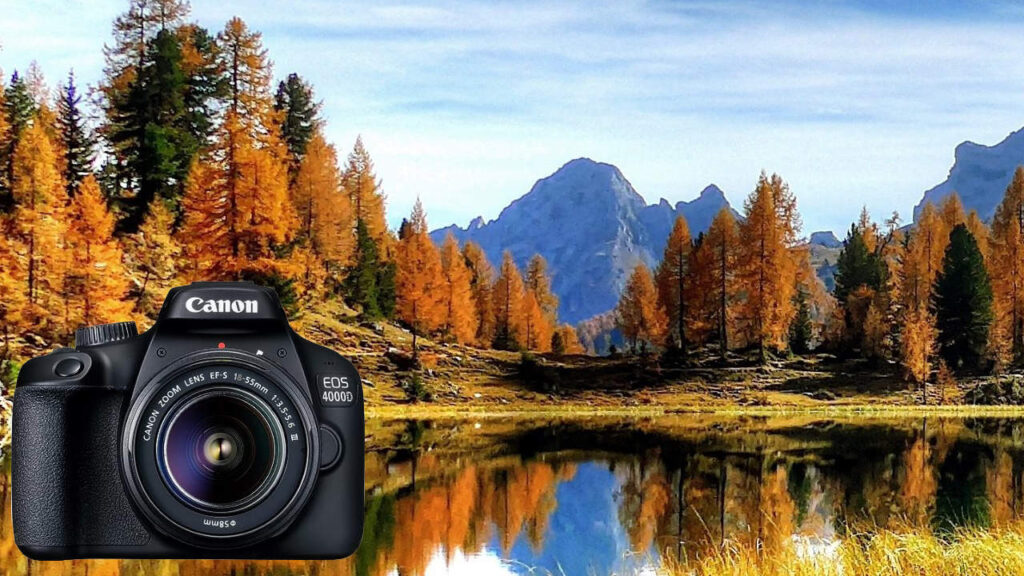
The Canon EOS 4000D bundle typically includes the camera body, an EF-S 18-55mm f/3.5-5.6 III lens, a camera bag, and a memory card. This “ready-to-shoot” package provides everything a beginner needs to start taking photos immediately.
The included SB130 shoulder bag offers decent protection with compartments for your camera, lens, and accessories, while the 128GB SD card provides ample storage for thousands of photos and hours of video. The entire package is designed with simplicity in mind, making the transition from smartphone photography to DSLR as painless as possible.
Canon EOS 4000D: An Entry-Level DSLR That Delivers Professional Results
The Canon EOS 4000D represents the absolute entry point into Canon’s DSLR ecosystem, yet it shares DNA with cameras costing several times more. Despite its plastic construction (even the lens mount is plastic rather than the usual metal), the 4000D houses an 18.7-megapixel APS-C CMOS sensor that produces images with detail and dynamic range far beyond what any smartphone can achieve. This camera embodies Canon’s strategy to create an ultra-affordable gateway to “real” photography without compromising on core image quality.
What makes the 4000D particularly impressive is how it democratizes photography. For less than $500, you get access to Canon’s vast lens ecosystem, RAW shooting capabilities, optical viewfinder experience, and manual controls that form the foundation of photographic knowledge. While professional photographers might scoff at its plastic build and simplified features, the images this camera produces can be virtually indistinguishable from those taken with cameras costing much more – especially when paired with quality lenses as your skills develop.
Core Features of the Canon EOS 4000D Camera
Canon EOS 4000D Key Specifications
• 18.7-megapixel APS-C CMOS sensor
• DIGIC 4+ image processor
• ISO range of 100-6400 (expandable to 12800)
• 9-point autofocus system
• Full HD 1080p video at 30fps
• 2.7-inch LCD screen (not touch-sensitive)
• Optical viewfinder with 95% coverage
• 3fps continuous shooting
• Built-in Wi-Fi
• Battery life: approximately 500 shots
While the specifications might not impress seasoned photographers, they represent a thoughtful balance between performance and affordability. The 18.7-megapixel sensor might seem modest compared to newer models boasting 24MP or more, but this resolution is more than enough for most beginners and enthusiasts. In fact, the slightly lower resolution can actually produce less noise in low-light situations compared to some higher-resolution sensors of the same generation.
The DIGIC 4+ processor, though not Canon’s latest, handles image processing efficiently and provides excellent color reproduction – a hallmark of Canon cameras. The ISO range of 100-6400 (expandable to 12800) gives you flexibility in varying lighting conditions, though image quality does degrade noticeably at higher ISO values. For beginners learning the exposure triangle, this range provides ample room for experimentation without unnecessary complexity.
18-Megapixel APS-C CMOS Sensor Performance
The heart of the Canon EOS 4000D is its 18-megapixel APS-C CMOS sensor, which captures images with excellent clarity and detail under favorable lighting conditions. This sensor size (approximately 22.3 × 14.9mm) is significantly larger than those found in smartphones and point-and-shoot cameras, allowing for superior light-gathering capabilities and the professional-looking background blur photographers crave. In good lighting, the sensor produces images with natural colors, decent dynamic range, and enough resolution for large prints up to 11×14 inches without interpolation.
Full HD 1080p Video Recording Capabilities
The Canon EOS 4000D shoots Full HD 1080p video at 30fps (frames per second), which is perfectly adequate for casual videography and social media content. While it lacks 4K recording, 60fps options, and advanced video features found in more expensive cameras, the video quality is surprisingly good in well-lit environments. The camera provides basic manual control over exposure during video recording, allowing creative control over depth of field and exposure settings.
One limitation worth noting is the absence of a microphone input, meaning you’re restricted to the camera’s built-in mono microphone. This makes the Canon EOS 4000D less suitable for vloggers or those requiring high-quality audio. Additionally, the contrast-detection autofocus in Live View mode (used for video) is noticeably slower than more modern systems, occasionally hunting for focus during recording.
DIGIC 4+ Image Processor: What It Offers
Canon’s DIGIC 4+ processor might not be their latest chipset, but it provides reliable performance for the Canon EOS 4000D’s target audience. This processor enables the camera’s 3fps continuous shooting, which, while modest by today’s standards, is sufficient for capturing basic action sequences and moving subjects. The processor also contributes to the camera’s excellent JPEG engine, which produces images with Canon’s signature pleasing color science straight out of the camera.
Where the older processor shows its age is in buffer capacity and processing speed. When shooting RAW files, you’ll find the buffer fills quickly after just a handful of continuous shots, requiring a pause before shooting can resume. Similarly, the camera takes longer to process and display images after capture compared to newer models. However, these limitations are unlikely to significantly impact beginners who typically take more deliberate, single shots rather than rapid bursts.
The DIGIC 4+ also enables the camera’s Scene Intelligent Auto mode, which analyzes the shooting environment and automatically selects appropriate settings. This feature is particularly valuable for beginners transitioning from smartphone photography, as it allows them to concentrate on composition while the camera handles technical settings.
- Reliable image processing with Canon’s pleasing color science
- Enables 3fps continuous shooting capability
- Powers Scene Intelligent Auto mode for beginner-friendly operation
- Manages ISO performance up to 6400 (expandable to 12800)
- Supports Full HD 1080p video recording at 30fps
ISO Range and Low-Light Performance
The Canon EOS 4000D offers an ISO range of 100-6400, expandable to 12800 in H mode. In practical terms, images remain clean and detailed up to ISO 800, with usable results at ISO 1600. Beyond that, noise becomes increasingly apparent, with ISO 3200 representing the upper limit for acceptable quality in most situations. This performance is respectable for an entry-level DSLR and significantly better than any smartphone or point-and-shoot camera.
For beginners learning night photography or shooting in dimly lit interiors, I recommend staying below ISO 1600 when possible and using a tripod for longer exposures rather than pushing the ISO higher. That said, even somewhat noisy images at higher ISOs are preferable to missed shots, and noise reduction software can work wonders in post-processing. The Canon EOS 4000D’s relatively modest 18.7MP resolution actually helps here, as the lower pixel density generally produces less noise than higher-resolution sensors of the same generation and size.
The EF-S 18-55mm Lens: Your Gateway to Photography
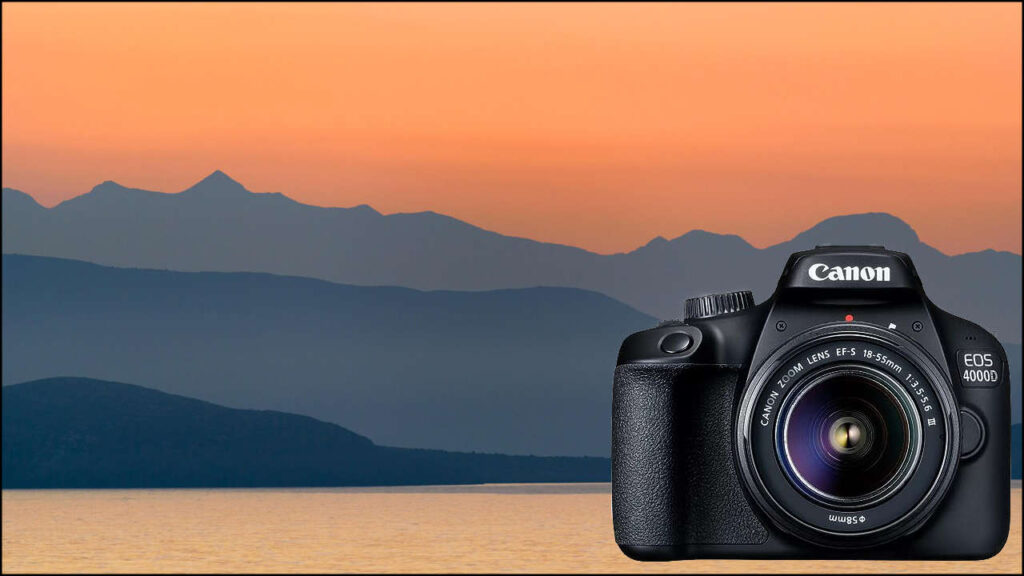
The included EF-S 18-55mm f/3.5-5.6 III lens is Canon’s most basic kit lens, but don’t let that fool you – it’s surprisingly capable for everyday photography. This lightweight zoom provides a versatile focal range equivalent to 29-88mm on a full-frame camera, covering everything from moderately wide landscapes to medium telephoto for portraits. While it lacks image stabilization (IS) found in pricier versions, the lens delivers sharp images when used with good technique or a tripod.
The plastic construction keeps weight to a minimum, making the entire kit comfortable for all-day shooting. Though the build quality feels somewhat flimsy compared to Canon’s higher-end lenses, the optical performance exceeds expectations for its price point. The lens exhibits minimal distortion at the wide end and produces pleasing bokeh (background blur) when shooting at its longest focal length with maximum aperture.
Focal Length Versatility for Different Shooting Scenarios
The 18-55mm focal range makes this lens remarkably versatile for beginners. At 18mm, you can capture expansive landscapes, architecture, and group photos without needing to stand too far back. The middle range, around 35mm, approximates the natural perspective of human vision, ideal for street photography and environmental portraits. At 55mm, the lens allows for flattering portraits with some subject isolation from the background, especially when shooting at maximum aperture.
This versatility means most beginners won’t need additional lenses right away, allowing them to focus on developing compositional skills and understanding exposure before investing in specialized glass. The focal range covers approximately 80% of typical shooting scenarios for most casual photographers, making it an ideal learning tool.
Aperture Range and What It Means for Your Photos
The variable aperture range of f/3.5-5.6 represents one of the compromises in this budget lens. At 18mm, the maximum aperture is f/3.5, but this narrows to f/5.6 as you zoom to 55mm. This variable aperture design is common in kit lenses and helps keep size, weight, and cost down. For beginners, it’s important to understand that this means the lens gathers less light at longer focal lengths, requiring slower shutter speeds or higher ISO in identical lighting conditions.
Despite this limitation, the aperture range is sufficient for most daylight photography. In lower light, you’ll need to increase your ISO or use a tripod for longer exposures. The smaller maximum aperture also means you’ll get less background blur than with premium lenses, though you can still achieve pleasant bokeh by maximizing subject-to-background distance and shooting at 55mm with the aperture wide open.
Lens Construction and Image Quality
The EF-S 18-55mm f/3.5-5.6 III features 11 elements in 9 groups, a simplified optical formula compared to Canon’s higher-end lenses. Central sharpness is surprisingly good throughout the zoom range, especially when stopped down to f/8-f/11. Corner sharpness is acceptable but noticeably softer, particularly at wider apertures. The lens exhibits some chromatic aberration (color fringing) in high-contrast areas, though this is easily corrected in post-processing.
One important consideration is that this particular version lacks the image stabilization found in the “IS” variants of this lens. Without stabilization, you’ll need to maintain faster shutter speeds (generally at least 1/focal length) to avoid camera shake. This becomes particularly important at the longer end of the zoom range where a minimum shutter speed of 1/60 or faster is recommended for handheld shooting.
Practical Shooting Experience with the 4000D
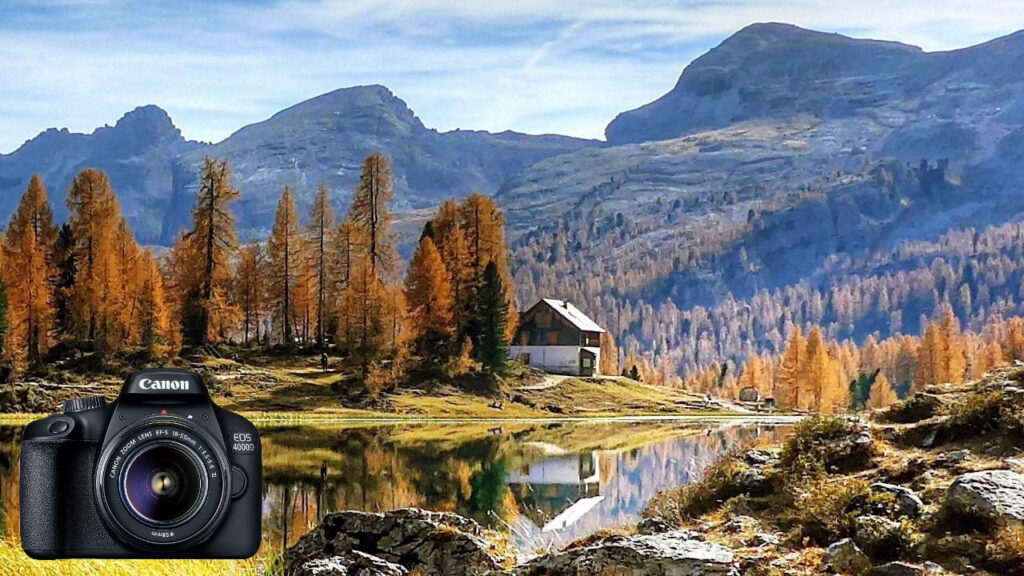
In daily use, the Canon EOS 4000D offers a genuine DSLR experience despite its budget constraints. The optical viewfinder, though offering only 95% frame coverage, provides a direct connection to your subject without electronic delay or battery drain. This traditional viewing experience is increasingly rare in today’s market, dominated by mirrorless cameras, and is still preferred by many photographers for certain types of shooting.
Optical Viewfinder vs. Live View LCD Display
The optical viewfinder on the Canon EOS 4000D is bright enough for comfortable framing in most conditions, though it’s smaller than those found on more expensive DSLRs. It displays basic exposure information and active focus points, giving you essential data without removing your eye from the scene. The 95% frame coverage means some elements near the edges may appear in your final image that weren’t visible in the viewfinder – something to remember when composing critical shots.
The 2.7-inch rear LCD screen is noticeably smaller and lower resolution than current standards, but it’s functional for reviewing images and navigating menus. When used for Live View shooting, the screen provides 100% frame coverage and allows for precise manual focusing with magnification. However, the screen isn’t articulating or touch-sensitive, limiting its usefulness for creative angles or quick setting adjustments.
Auto Focus System and Tracking Capabilities
The 9-point autofocus system in the Canon EOS 4000D is basic by today’s standards, but it performs reliably in good lighting conditions. The center focus point is cross-type, offering greater sensitivity than the surrounding eight points. When shooting through the viewfinder with static subjects in decent light, focus acquisition is quick and accurate, especially when using the center point.
Tracking moving subjects is more challenging with this limited AF system. For action photography, pre-focusing on a specific spot where your subject will pass and using continuous shooting mode often yields better results than relying on continuous autofocus tracking. In Live View mode, autofocus performance slows considerably, as the camera uses contrast-detection rather than the faster phase-detection system available through the viewfinder.
Scene Intelligent Auto Mode for Beginners
Canon’s Scene Intelligent Auto mode is particularly valuable for photographers transitioning from smartphones. This sophisticated automatic mode analyzes the scene and selects appropriate settings for exposure, white balance, and even focus points. The system can recognize various scenarios from landscapes to portraits and optimize settings accordingly. For beginners, this means being able to concentrate on composition and timing while still achieving technically solid images.
As your skills develop, the Canon EOS 4000D allows for a gradual transition to more manual control. Program mode offers automatic exposure with user adjustments, while Aperture Priority and Shutter Priority modes introduce the fundamentals of exposure control. Once ready, fully Manual mode provides complete creative freedom. This progressive learning curve is one of the 4000D’s greatest strengths as an educational tool.
Creative Filters and Special Effects
The 4000D includes several creative filters that can be applied to images after capture, including Grainy B/W, Soft Focus, Fish-eye Effect, Toy Camera Effect, and Miniature Effect. While serious photographers might dismiss these as gimmicks, they offer beginners a fun way to experiment with different styles without needing separate editing software. These filters can help new photographers discover their aesthetic preferences and understand visual elements like contrast, saturation, and selective focus.
Battery Life and Performance
The Canon EOS 4000D uses the LP-E10 battery, rated for approximately 500 shots per charge when shooting through the viewfinder. This is respectable battery life for an entry-level DSLR and should easily cover a full day of casual shooting. Using Live View mode significantly reduces battery life to around 180 shots, so carrying a spare battery is recommended if you plan to use the LCD extensively for composition or video recording.
The camera’s startup time is quick at approximately 0.5 seconds, allowing you to capture spontaneous moments without significant delay. The 3fps continuous shooting rate is modest but adequate for casual action photography like children’s sports or pets playing. The buffer depth allows for approximately 6 RAW files or unlimited JPEGs in continuous mode, assuming you’re using a reasonably fast memory card.
- Optical viewfinder offers battery-efficient framing without electronic lag
- Modest 9-point AF system performs well in good lighting
- Scene Intelligent Auto mode delivers consistent results for beginners
- Creative filters provide artistic options without separate editing software
- 500-shot battery life covers a full day of shooting via the viewfinder
Despite its budget positioning, the Canon EOS 4000D delivers a shooting experience that embraces photography fundamentals. The camera responds predictably to user inputs and produces consistent results that reward proper technique. For photographers accustomed to smartphone immediacy, there’s a learning curve to the DSLR workflow, but the resulting creative control and image quality improvements make the adjustment worthwhile.
Camera Controls and Menu Navigation
Canon has maintained a consistent control layout across their entry-level DSLRs for years, making the Canon EOS 4000DD immediately familiar to anyone who has used a Canon camera before. The control scheme prioritizes essential functions with dedicated buttons for ISO, autofocus mode, white balance, and drive mode. This direct access to key settings means less time digging through menus and more time capturing images, especially important for beginners still learning the fundamentals.
The mode dial on top of the camera provides quick access to various shooting modes, from fully automatic to manual control. Canon’s thoughtful inclusion of Creative Auto mode bridges the gap between Auto and more advanced modes, allowing creative control over depth of field and color ambience without requiring technical knowledge of aperture values or white balance settings. This graduated approach to camera control helps beginners develop confidence before tackling fully manual exposure.
SD Card Importance and Usage
- Class 10 or UHS-I cards recommended for optimal performance
- Minimum 32GB capacity for casual shooting
- Format the card in-camera before first use for best compatibility
- Consider backup cards for important shoots
- Use card reader for faster transfers to computer
The 128GB SD card included in the Canon EOS 4000D bundle is far more than just a storage accessory – it’s a critical component that affects your camera’s overall performance. While the 4000D doesn’t demand the fastest cards on the market, using a quality card prevents buffer limitations during continuous shooting and ensures smooth video recording without dropped frames. The included high-capacity card eliminates the immediate need for additional storage, allowing beginners to focus on learning photography rather than managing multiple cards.
One often overlooked aspect of SD cards is reliability. Lower-quality cards can corrupt unexpectedly, potentially resulting in the loss of irreplaceable images. The bundled card provides peace of mind with decent durability and data protection. For professional work or once-in-a-lifetime events like weddings or vacations, consider keeping a backup card in your bag as insurance against potential card failure.
Proper card maintenance also extends its lifespan. Always format the card in-camera (not via computer) before first use and periodically thereafter. Turn the camera off before removing the card, and avoid filling it completely to prevent potential file system issues. These simple habits help ensure your memories remain safe throughout your photographic journey with the Canon EOS 4000D.
Reading and Writing Speed Impact on Performance
Card speed directly impacts several aspects of the Canon 4000D’s performance. During continuous shooting, a faster card clears the buffer more quickly, allowing you to capture more consecutive images before the camera slows down. While the Canon EOS 4000D’s modest 3fps burst rate doesn’t demand cutting-edge transfer speeds, a Class 10 or UHS-I card still provides noticeable benefits over basic Class 4 cards.
For video recording, card write speed becomes even more crucial – insufficient speed can cause recording to stop unexpectedly or result in dropped frames that ruin footage. The bundled 128GB card provides ample speed for the camera’s Full HD video capabilities, ensuring consistent recording performance.
Storage Capacity: How Many Photos Can You Take?
With the included 128GB card, capacity concerns become virtually non-existent for most photographers. At the camera’s 18.7MP resolution, you can store approximately 16,000 high-quality JPEG images or 4,000 RAW files – more than enough for extended vacations or professional assignments without needing to download.
For video recording, this capacity translates to roughly 8 hours of Full HD 1080p footage at 30fps. This generous storage allows beginners to shoot freely without constantly worrying about running out of space, facilitating experimentation and skill development that might otherwise be inhibited by storage limitations.
Who Should Buy the Canon EOS 4000D Kit?
The Canon EOS 4000D kit is ideally suited for several specific types of photographers. First-time DSLR users transitioning from smartphone photography will appreciate its straightforward controls and familiar Canon color science, making the learning curve less intimidating. Photography students and hobbyists on tight budgets gain access to a true DSLR experience and interchangeable lens system without significant financial commitment.
Family photographers seeking better image quality for precious memories will find the improved dynamic range and low-light performance a substantial upgrade over smartphones or point-and-shoot cameras. Lastly, casual travel photographers who want better vacation photos without carrying expensive equipment will value its lightweight design and reliable performance.
Ideal Users: From Beginners to Budget-Conscious Enthusiasts
The Canon EOS 4000D shines brightest in the hands of photography newcomers eager to learn core principles without being overwhelmed by excessive features. Its gradual learning curve – from fully automatic modes to complete manual control – creates a natural progression that builds confidence and technical understanding. The optical viewfinder experience helps develop fundamental photography skills that translate to any camera system.
Budget-conscious enthusiasts already familiar with photography concepts will appreciate how the 4000D provides access to Canon’s vast ecosystem of lenses and accessories without requiring a significant initial investment. With careful technique and good lighting, the image quality rivals cameras costing considerably more, making it an excellent option for those who prioritize results over premium build quality or cutting-edge features.
Limitations to Consider Before Purchasing
While the Canon EOS 4000D offers impressive value, potential buyers should be aware of several limitations. The plastic lens mount, though functionally adequate, lacks the durability of metal mounts found in other Canon DSLRs and may require more careful handling when changing lenses. The 9-point autofocus system struggles with fast-moving subjects and in low-light conditions compared to more advanced systems. Video capabilities are basic by current standards, lacking 4K resolution, 60fps options, microphone input, and effective continuous autofocus during recording.
The camera’s 3fps continuous shooting speed is adequate for casual use but may frustrate those attempting serious sports or wildlife photography. The 2.7-inch non-touch LCD screen feels dated compared to the larger, higher-resolution displays common in today’s market. Additionally, the absence of image stabilization in both the camera body and included lens means more attention must be paid to maintaining appropriate shutter speeds to avoid blur from camera shake, particularly in lower light.
For photographers who already know they’ll focus on specific genres like action, wildlife, or professional videography, investing in a more capable camera system from the beginning might be more economical long-term. However, for general photography and learning the craft, the Canon EOS 4000D’s limitations are rarely deal-breakers – and in some ways, they encourage developing proper technique rather than relying on technological assistance.
- Plastic lens mount requires careful handling during lens changes
- Basic 9-point autofocus system struggles with fast action and dim lighting
- Limited video features (no 4K, no mic input, basic autofocus)
- Modest 3fps continuous shooting speed
- Small 2.7-inch non-touch LCD screen
- No image stabilization in body or kit lens
Price-to-Performance Ratio: Is It Worth Your Money?
At approximately $439 for the renewed bundle with camera body, 18-55mm lens, 128GB card, and bag, the Canon EOS 4000D offers exceptional value compared to other entry-level DSLRs. When evaluating its worth, consider not just the hardware specifications but also the intangible value of joining Canon’s ecosystem – access to countless lenses, a massive user community for support, and excellent resale value when you eventually upgrade.
While competitors like the Nikon D3500 offer some technical advantages (better battery life, higher resolution), the Canon EOS 4000D bundle’s comprehensive nature and lower price point make it particularly appealing for true beginners. The image quality differences between entry-level DSLRs are minimal under most shooting conditions, making the 4000D’s value proposition especially strong for those prioritizing learning photography without a significant financial barrier to entry.
Frequently Asked Questions
Throughout my testing of the Canon EOS 4000D, certain questions consistently arise from potential buyers trying to determine if this camera meets their needs. The following section addresses the most common inquiries about the 4000D’s capabilities, limitations, and compatibility with Canon’s broader ecosystem. These practical answers should help clarify expectations and ensure your photography journey with the Canon EOS 4000D starts on the right foot.
Remember that while the Canon EOS 4000D has certain technical limitations compared to more expensive models, these rarely impede the creative development of beginning photographers. Focus on learning composition, lighting, and basic exposure principles rather than becoming overly concerned with specifications – these fundamental skills transfer to any camera you might use in the future.
Does the Canon EOS 4000D have built-in image stabilization?
No, the Canon EOS 4000D does not feature built-in image stabilization in the camera body. Additionally, the standard EF-S 18-55mm f/3.5-5.6 III kit lens included in most bundles also lacks optical image stabilization. This means you’ll need to maintain faster shutter speeds to prevent camera shake, particularly at longer focal lengths. As a general rule, try to keep your shutter speed at 1/focal length or faster when shooting handheld (e.g., at least 1/55 second when zoomed to 55mm).
If image stabilization is important for your photography needs, consider upgrading to an IS-equipped lens like the EF-S 18-55mm f/4-5.6 IS STM. These stabilized lenses typically allow you to shoot 3-4 stops slower than normal while maintaining sharp images, which is particularly valuable in lower light conditions or when using longer focal lengths. Alternatively, using a tripod effectively eliminates camera shake concerns regardless of shutter speed.
Can I use other Canon lenses with the EOS 4000D?
Yes, the Canon EOS 4000D is compatible with Canon’s entire EF and EF-S lens lineup, giving you access to over 80 different lenses ranging from ultra-wide-angle to super-telephoto. This exceptional lens compatibility is one of the camera’s strongest selling points, as it allows your system to grow with your skills and interests.
The APS-C sensor applies a 1.6x crop factor to lens focal lengths, so a 50mm lens effectively becomes an 80mm lens in terms of field of view. For beginners looking to expand beyond the kit lens, popular affordable options include the 50mm f/1.8 STM (“nifty fifty”) for portraits, the 10-18mm f/4.5-5.6 IS STM for landscapes, and the 55-250mm f/4-5.6 IS STM for telephoto reach.
What’s the difference between the EOS 4000D and more expensive Canon DSLRs?
The primary differences between the Canon EOS 4000D and more expensive Canon DSLRs include build quality, sensor resolution, autofocus capabilities, continuous shooting speed, and additional features. More expensive models typically feature metal construction (including the lens mount), weather sealing, larger viewfinders, articulating touch screens, dual memory card slots, and more sophisticated metering systems. For example, the EOS 90D offers a 32.5MP sensor, 45-point all cross-type AF system, 10fps shooting, 4K video, and a vari-angle touchscreen.
Despite these differences, the fundamental image quality between the Canon EOS 4000D and higher-end Canon DSLRs remains surprisingly close in good lighting conditions, particularly at lower ISO settings. The Canon EOS 4000Dnon color science and rendering that photographers value. For beginners focused on learning technique rather than pushing technical boundaries, these differences rarely impact creative development.
Another significant difference is operational speed and responsiveness – higher-end models feel more immediate in their response to user inputs, buffer clearing, and overall handling. While this enhanced responsiveness is appreciated by experienced photographers, beginners rarely find the Canon EOS 4000D’s modest performance limiting as they develop their skills.
How long does the battery last when shooting videos?
When recording Full HD 1080p video continuously, the Canon EOS 4000D’s LP-E10 battery typically lasts approximately 1.5 to 2 hours, depending on temperature conditions and whether you’re using the LCD screen for monitoring. This duration is sufficient for most casual video recording needs, though serious videographers should consider purchasing spare batteries for extended shooting sessions. Note that using the camera’s built-in Wi-Fi functionality during video recording significantly reduces battery life, as does recording in colder temperatures.
Is the EOS 4000D weather-sealed for outdoor photography?
No, the Canon EOS 4000D does not feature weather sealing against moisture, dust, or extreme temperatures. The camera’s plastic construction, while keeping weight down, offers limited protection against environmental challenges compared to higher-end sealed DSLRs. When shooting in light rain or dusty conditions, consider using a simple rain cover or camera sleeve for protection. In extremely cold environments, keep spare batteries warm in an inside pocket, as cold temperatures significantly reduce battery performance. Despite these limitations, the Canon EOS 4000D can handle normal outdoor shooting conditions without issue – just exercise reasonable caution in challenging environments.
For photographers who frequently shoot in adverse weather conditions, investing in a weather-sealed camera body and lenses would be advisable. However, for beginners and casual photographers who typically avoid shooting in harsh conditions anyway, the lack of weather sealing rarely becomes a practical limitation.
The Canon EOS 4000D represents an extraordinary value in the DSLR market, delivering core photographic capabilities at an accessible price point. By focusing on essential features while trimming premium touches, Canon has created a genuine DSLR experience that welcomes newcomers to photography without overwhelming financial commitment. Digital Camera World experts continue to recommend this camera as an ideal starting point for anyone looking to move beyond smartphone photography into the world of interchangeable lenses and creative control.
Canon EOS 4000D Black Camera & 18-55 Lens + SB130 Bag & SD Card is a great option for beginners looking to get into photography. If you’re new to using this camera, you might find this Reddit discussion helpful for tips and advice.
See also mirrorless cameras.