

Key Takeaways
- The Omegon AC 70/700 is an ideal entry-level telescope for beginners with its simple setup and user-friendly design
- With a 70mm aperture and 700mm focal length, this refractor telescope excels at lunar and planetary viewing
- No tools are required for assembly, making it accessible for both adults and children to start observing immediately
- Realistic expectations are important – while you’ll see Jupiter’s bands and Saturn’s rings, they’ll appear small compared to professional images
- Levenhuk offers quality accessories that can significantly enhance your viewing experience with this beginner telescope
The Omegon AC 70/700 Telescope: Your Gateway to Stargazing
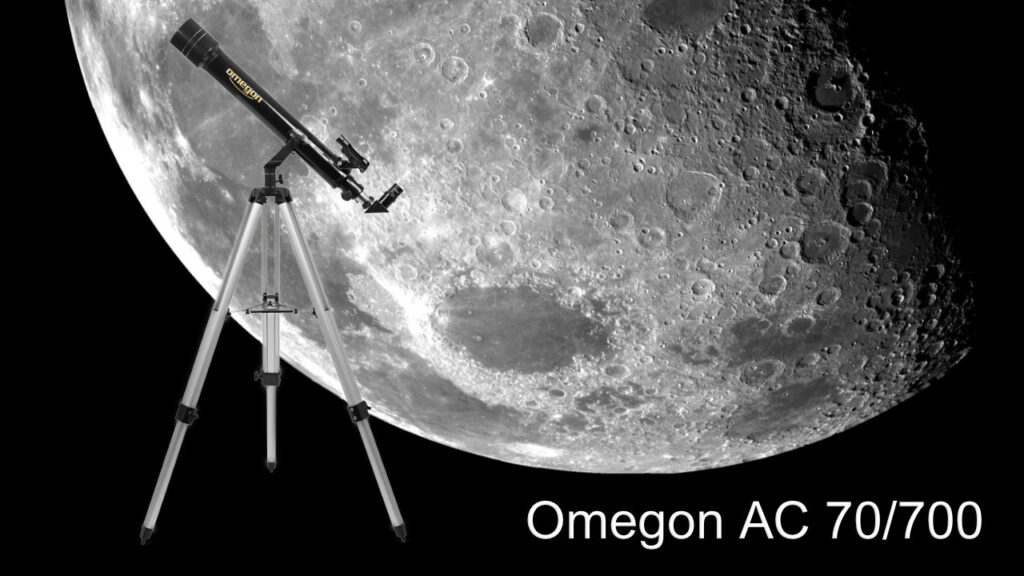
The night sky beckons, and the Omegon AC 70/700 AZ-2 telescope answers the call with remarkable simplicity and optical performance that strikes an excellent balance for newcomers to astronomy. This classical refractor telescope embodies what beginners need most: accessibility, ease of use, and enough optical power to reveal celestial wonders that will spark a lifelong passion. As Levenhuk’s popular entry-level offering, this telescope has introduced countless stargazers to their first breathtaking views of lunar craters, Saturn’s rings, and Jupiter’s cloud bands.
Setting up and using a telescope for the first time can be intimidating, but the Omegon AC 70/700 removes this barrier with its intuitive design and straightforward operation. Whether you’re eight or eighty, this telescope welcomes observers of all ages with its no-tools assembly and smooth, responsive controls. The included accessories provide everything needed to begin exploring the cosmos immediately, while the sturdy AZ-2 mount offers the stability necessary for satisfying views of celestial objects.
While more expensive telescopes may offer more light-gathering capability or advanced features, the Omegon AC 70/700 focuses on providing a frustration-free introduction to astronomy at an accessible price point. This balance of quality, simplicity, and affordability makes it an excellent choice for individuals or families looking to dip their toes into the astronomical waters before committing to more specialized equipment.
Technical Specifications of the Omegon AC 70/700
The Omegon AC 70/700 features classic refractor telescope design elements that have proven effective for generations of astronomers. Its designation refers to its 70mm aperture (the diameter of the main lens) and 700mm focal length (the distance light travels within the telescope). These specifications place it firmly in the category of instruments designed primarily for lunar and planetary observation, though it can certainly reveal brighter deep-sky objects under favorable conditions.
70mm Aperture and 700mm Focal Length: What This Means
The 70mm (2.75-inch) aperture determines the telescope’s light-gathering ability – essentially how much celestial light it can collect and focus. While modest compared to larger instruments, this aperture provides sufficient light collection to reveal significant detail on the Moon, the phases of Venus, Mars’ polar caps (when favorably positioned), Jupiter’s main cloud bands and four largest moons, and Saturn’s rings.
The 700mm focal length creates a relatively narrow field of view that works advantageously for planetary observation, providing sufficient magnification to see planetary details even with the included eyepieces. This combination makes the telescope particularly well-suited for beginners interested in exploring our solar system neighborhood.
f/10 Focal Ratio: Perfect for Lunar and Planetary Viewing
The f/10 focal ratio (calculated by dividing the focal length by the aperture) indicates this telescope’s optical characteristics and ideal applications. This relatively “slow” focal ratio excels at providing high-contrast views of planets and lunar features, minimizing some chromatic aberration (color fringing) that can affect refractor telescopes.
The longer focal ratio also provides a more forgiving experience for beginners by offering a narrower field of view with easier tracking and a more comfortable eye relief when using eyepieces. While wide-field deep sky observation isn’t this instrument’s primary strength, the focal ratio strikes an excellent balance for the targets most beginners find most immediately rewarding – the Moon and bright planets.
Included Accessories: Eyepieces, Barlow Lens, and Red Dot Finder
The Omegon AC 70/700 comes equipped with essential accessories that enhance the observing experience. Two eyepieces – typically 10mm and 25mm – provide different magnification options (70x and 28x respectively), allowing observers to switch between wider views for locating objects and higher magnification for examining details.
The included 2x Barlow lens effectively doubles the magnification of any eyepiece, expanding the telescope’s versatility without requiring additional purchases. The straightforward red dot finder helps with aiming the telescope, projecting a red dot against the night sky that makes locating celestial targets significantly easier for beginners than traditional finderscopes. This thoughtfully selected accessory package provides everything needed to begin meaningful astronomical observations immediately.
Setting Up Your First Telescope
The Omegon AC 70/700 telescope truly shines when it comes to setup simplicity – a crucial factor for beginners who might otherwise become frustrated before even seeing their first celestial object. Unlike more complex instruments that require careful alignment procedures or specialized knowledge, this telescope can be assembled and ready for stargazing in minutes, with absolutely no tools required. The straightforward design emphasizes accessibility without sacrificing the stability needed for meaningful astronomical observations.
No-Tools Assembly Process
Setting up the Omegon AC 70/700 is refreshingly straightforward – simply extend the tripod legs, attach the accessory tray (which also adds stability), and secure the telescope tube to the mount using the provided thumbscrews. The entire process typically takes less than 10 minutes, even for complete beginners. This tool-free assembly makes the telescope particularly well-suited for children, families, or anyone who wants to minimize setup time and maximize observation time. The thoughtfully designed carrying case also protects the instrument between uses and makes transportation to darker observation sites practical – a significant advantage for an entry-level telescope.
Once assembled, the telescope’s controls are intuitive enough that most users can understand their operation without extensive reading of the manual. The smooth altitude (up-down) and azimuth (left-right) adjustment knobs provide natural pointing control that mimics how we naturally look around. This simplicity contrasts favorably with the learning curve associated with equatorial mounts found on many other beginner telescopes, which require understanding celestial coordinates and polar alignment before effective use.
Proper Alignment and Calibration Steps
While the Omegon AC 70/700 doesn’t require the precise polar alignment needed for astrophotography or equatorial mounts, a few simple calibration steps will significantly enhance your viewing experience. Begin by adjusting the tripod height for comfortable viewing – ideally while seated, as this provides more stability during observation.
Next, calibrate the red dot finder in daylight by aiming at a distant object (like a telephone pole) and adjusting the finder until its red dot aligns exactly with where the telescope is pointed. This one-time alignment makes nighttime target acquisition much easier. Finally, ensure the diagonal mirror is securely attached before inserting eyepieces, as this component redirects light to a more comfortable viewing position and is essential for proper focus.
Understanding the Alt-Azimuth Mount Controls
The AZ-2 alt-azimuth mount included with the Omegon AC 70/700 represents an ideal balance between simplicity and functionality for beginners. The mount features separate control knobs for altitude (vertical) and azimuth (horizontal) movements, allowing for intuitive adjustments when tracking celestial objects across the night sky. The tension of these controls can be adjusted to provide smooth movement while preventing the telescope from shifting position when you’re not actively moving it – an important feature when observing at higher magnifications, where even slight movements are amplified.
The mount’s simplicity is actually an advantage for beginners, as it encourages developing natural tracking skills rather than relying on motorized systems. As celestial objects move across the sky due to Earth’s rotation, you’ll learn to make small, regular adjustments to keep them centered in your eyepiece. This hands-on experience builds a practical understanding of celestial motion that forms the foundation for more advanced astronomical knowledge. The mount’s stable design also minimizes vibrations during observation – a common issue with less expensive telescopes that can significantly diminish the viewing experience.
What You Can See Through the Omegon AC 70/700
Understanding what you can realistically observe with the Omegon AC 70/700 helps establish appropriate expectations and directs you toward the most satisfying targets for this particular instrument. While professional astronomy images taken by space telescopes and large observatories might show spectacular, colorful views of distant galaxies, the visual experience through any amateur telescope – especially a beginner model – will be quite different. Nevertheless, the views through this telescope can be truly awe-inspiring when you understand its strengths and limitations.
Moon Observation: Surface Details and Craters
The Moon is undoubtedly where the Omegon AC 70/700 delivers its most spectacular performance. Even at lower magnifications, lunar features appear with striking clarity and contrast. The telescope resolves major crater systems like Tycho and Copernicus with impressive detail, revealing their complex central peaks and ejecta patterns. Along the terminator line (the division between lunar day and night), shadows create dramatic three-dimensional views of mountain ranges and crater walls that often elicit gasps from first-time observers. Using the included 10mm eyepiece provides sufficient magnification to explore smaller features like rilles (narrow valleys) and secondary impact craters.
The Moon also offers constantly changing views as its phases progress, meaning you’ll never exhaust its observational potential. The waxing crescent reveals delicate details along the Sea of Crises, while the first quarter phase dramatically highlights the Apennine Mountains and the vast expanse of Mare Imbrium. Even experienced astronomers with larger instruments regularly return to lunar observation for its reliability and spectacular detail. For beginners with the Omegon AC 70/700, the Moon provides immediate gratification and remains endlessly fascinating as observational skills develop.
Planetary Views: Jupiter, Saturn, and Mars
Jupiter appears as a distinct disk with visible atmospheric bands even at modest magnifications through the Omegon AC 70/700. The planet’s four largest moons – Io, Europa, Ganymede, and Callisto – appear as bright points flanking the planetary disk, changing position noticeably even over a single observing session. With good atmospheric conditions and the included Barlow lens, you may glimpse Jupiter’s Great Red Spot when it’s facing Earth, though it will appear more as a subtle indentation than the vivid feature seen in spacecraft images.
Saturn delivers one of astronomy’s most memorable visual experiences – even through modest instruments like this one. The planet’s iconic rings are clearly visible, with the Cassini Division (the dark gap within the rings) potentially visible during moments of steady atmospheric conditions. The planet’s yellowish disk contrasts beautifully with the surrounding rings, creating a jewel-like appearance that has captivated observers for centuries. While surface details on Mars prove challenging with this aperture, during close approaches to Earth, the telescope can reveal the planet’s polar caps and larger surface features as subtle shadings on its reddish disk.
Bright Deep-Sky Objects: Orion Nebula and Star Clusters
While the Omegon AC 70/700’s aperture limits its deep-sky capabilities compared to larger instruments, several spectacular objects remain well within its reach. The Orion Nebula (M42) appears as a distinctive cloudy patch with a noticeable greenish tinge, with its trapezium of stars visible at the center under good conditions.
Open star clusters like the Pleiades (M45) and the Double Cluster in Perseus transform from mere smudges to the naked eye into sparkling collections of individual stars, revealing their true nature as stellar families. The Andromeda Galaxy (M31) appears as an elongated hazy patch with a brighter core – though without the spiral arm detail visible in photographs, seeing this distant galaxy of billions of stars with your own eyes provides a profound connection to the cosmos.
Realistic Expectations for Image Quality
The views through any amateur telescope differ significantly from the spectacular processed images from Hubble or professional observatories, and understanding this difference is crucial for enjoying backyard astronomy. Through the Omegon AC 70/700, planets appear small but distinct, with key features visible but not in the remarkable detail seen in NASA images.
Colors appear more subtle than in photographs – nebulae show as grayish patches rather than vivid pinks and reds, and galaxies appear as misty ovals rather than spectacular spiral structures. This difference exists even in professional telescopes, as the human eye cannot collect light over time like cameras. Nevertheless, there’s something profoundly moving about seeing these celestial wonders directly with your own eyes – a connection to the universe that digital images, however spectacular, cannot fully replicate.
Real-World Performance Analysis
The Omegon AC 70/700’s real-world performance reveals both its strengths and limitations as an entry-level instrument. Approached with realistic expectations, this telescope provides genuinely rewarding views of celestial objects that can inspire a lifelong interest in astronomy. Understanding its performance characteristics helps beginners maximize its potential while recognizing when their developing skills might eventually justify an upgrade to more advanced equipment.
During field testing under various conditions, the telescope consistently delivers sharp, high-contrast views of lunar and planetary targets – precisely the subjects that most beginners find most immediately accessible and rewarding. The optical quality proves surprisingly good for its price point, with careful manufacturing standards evident in the clean star images and minimal optical defects. While its light-gathering limitations become apparent when attempting to view fainter deep-sky objects, this constraint simply guides beginners toward the most appropriate targets rather than representing a significant drawback for its intended purpose.
Light-Gathering Capability Compared to Other Entry-Level Models
With its 70mm aperture, the Omegon AC 70/700 collects about 36% more light than common 60mm beginner telescopes, providing noticeably brighter images and revealing fainter details. This difference becomes particularly apparent when observing planets, where the extra light-gathering capability helps resolve subtle cloud bands on Jupiter or the Cassini Division in Saturn’s rings that might remain elusive in smaller instruments. The improved light collection also extends the telescope’s reach to dimmer deep-sky objects, bringing more stars into view within clusters and revealing subtle structure in brighter nebulae.
Compared to popular 76mm or 114mm reflector telescopes often marketed at similar price points, the Omegon’s smaller aperture collects less total light. However, its refractor design typically delivers higher contrast and sharper images, particularly on lunar and planetary targets, due to unobstructed optics and better quality control than many budget reflectors. This quality-over-quantity approach often provides more satisfying views for beginners than larger but optically inferior alternatives. The telescope strikes an excellent balance between affordability and performance that makes it an honest value in the entry-level market.
Omegon AC 70 Mount Stability During Observation
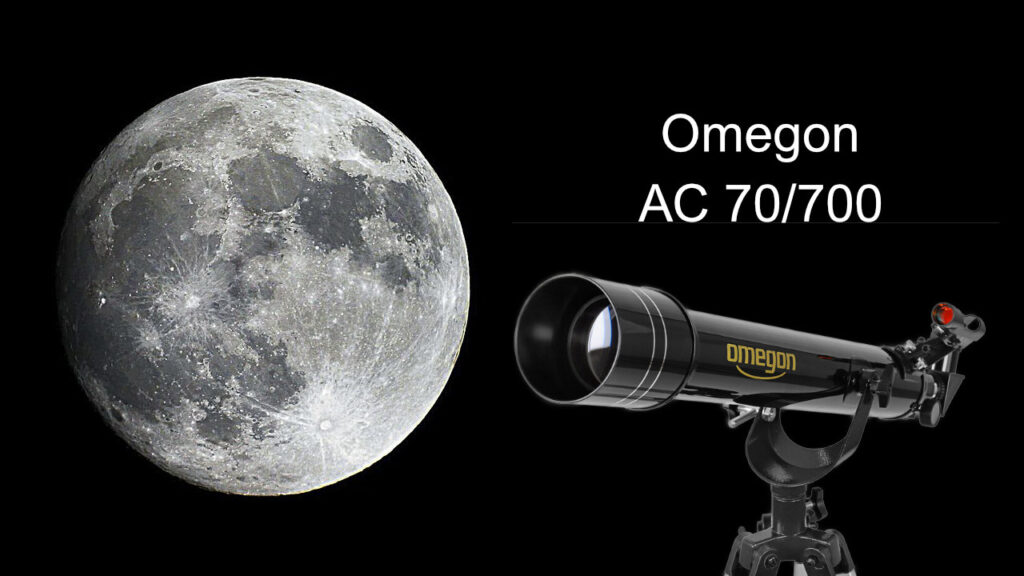
The AZ-2 mount provides surprisingly good stability for a telescope in this price range, minimizing the frustrating vibrations that plague many beginner instruments. When properly set up, vibrations from focusing or touching the telescope typically settle within 2-3 seconds – a respectable performance for visual observation. This stability becomes particularly important when observing at higher magnifications, where even slight movements can make viewing difficult. The mount’s smooth motion allows for precise tracking of objects, though some users may find the tension adjustment requires occasional fine-tuning as they become more experienced observers.
One notable advantage of the Omegon’s mount design is its intuitive movement system, which follows natural human pointing instincts rather than requiring understanding of celestial coordinates. For beginners, this straightforward approach removes a significant barrier to enjoyment, allowing immediate focus on observing rather than mastering complex controls. The mount’s payload capacity comfortably handles the telescope’s weight plus accessories, maintaining stability even when adding items like smartphone adapters for basic astrophotography.
Optical Quality and Chromatic Aberration
As an achromatic refractor, the Omegon AC 70/700 exhibits some chromatic aberration – visible as slight purple fringing around brighter objects like the Moon and planets. This optical characteristic is inherent to all affordable refractor telescopes and doesn’t significantly detract from the viewing experience for most beginners. The telescope’s relatively long focal ratio (f/10) helps minimize this effect compared to shorter, wider-field refractors. When properly focused, star images appear as tight points rather than fuzzy blobs, indicating good optical quality control during manufacturing.
The objective lens features decent anti-reflection coatings that improve light transmission and contrast, particularly noticeable when observing the subtle details in Jupiter’s cloud bands or lunar features. While not matching the performance of more expensive ED (Extra-low Dispersion) glass telescopes, the optics deliver remarkably good performance considering the affordable price point. First-time observers consistently express surprise at the clarity and detail visible through this modest instrument, particularly on the Moon, where contrast and resolution reveal substantial detail along the terminator line. For more information, you can explore the Omegon 70/700 AZ as a beginner telescope option.
Best Practices for Using Your Beginner Telescope
Developing good observational habits early will dramatically improve your experience with the Omegon AC 70/700 and build skills that transfer to any future astronomical equipment. Simple techniques and practices can transform potentially frustrating sessions into rewarding explorations of the night sky. Learning to work within the instrument’s capabilities rather than fighting against its limitations allows beginners to enjoy satisfying views while developing essential astronomical skills.
1. Finding Dark Skies for Better Views
While the Omegon AC 70/700 can certainly be used in urban and suburban environments, the quality of your observing experience improves dramatically under darker skies. Light pollution washes out fainter objects and reduces contrast, limiting what you can see. Even traveling to a local park away from direct streetlights can make a noticeable difference. For deep-sky objects like nebulae and galaxies, finding truly dark locations becomes essential for satisfying views. Websites and apps that measure light pollution can help identify promising local observing sites, while national parks and designated dark-sky preserves offer exceptional viewing conditions for special trips.
When darker locations aren’t accessible, focus on targets less affected by light pollution – primarily the Moon and bright planets. These objects remain impressive even from city locations and provide plenty of observational opportunities when deep-sky viewing isn’t practical. Regardless of location, allow at least 20-30 minutes for your eyes to adapt to darkness, as night vision substantially improves your ability to detect subtle details and fainter objects. Using a red flashlight rather than white light helps preserve this adaptation while still allowing you to consult star charts or adjust equipment.
2. Using Low Magnification First
A common beginner mistake involves immediately reaching for the highest possible magnification, which often results in dim, blurry images. Instead, start with the lower power eyepiece (typically the 25mm in this kit, providing about 28x magnification) to locate objects and observe their broader context. This wider field of view makes finding targets much easier and often reveals the most pleasing views of extended objects like star clusters. Once centered, gradually increase magnification using higher-power eyepieces or adding the Barlow lens to examine finer details.
Remember that atmospheric conditions limit useful magnification on any given night – a concept astronomers call “seeing.” When the atmosphere is turbulent, even the finest telescopes cannot resolve details beyond certain limits. On typical nights, the Omegon AC 70/700 performs best between 28x and 100x magnification, with higher powers reserved for exceptionally steady atmospheric conditions. Learning to match magnification to both your target and the observing conditions significantly enhances your viewing experience.
3. Steady Mounting Techniques
Minimizing vibrations dramatically improves views through any telescope, particularly at higher magnifications where movement becomes more noticeable. Position the tripod on solid ground rather than decking or other surfaces that transmit vibration. Avoid extending the tripod legs to their maximum height – a lower position increases stability. When possible, observe from a seated position to reduce the temptation to lean against the telescope. Use gentle touches when focusing, allowing vibrations to settle before making judgments about focus quality.
If you’re observing in windy conditions, your body can serve as a windbreak by positioning yourself between the breeze and the telescope. The accessory tray should be loaded with eyepieces and other items to add weight and dampen vibrations. Some observers find that hanging a weight (like a filled water bottle) from the center of the tripod creates additional stability. These simple techniques cost nothing yet substantially improve the viewing experience by allowing you to see finer details that would otherwise be obscured by constant movement. For more information on selecting the right equipment, check out the Omegon 70/700 AZ beginner telescope.
4. Patience and Practice Tips
Astronomy rewards patience in multiple ways – from waiting for moments of steady atmospheric seeing to the practiced skill of teasing out subtle details through extended observation. Rather than quickly jumping between multiple objects, spend time with each target, allowing your eyes to detect increasingly fine details as you observe. The human visual system actually improves its detection ability through continued observation of a single object, revealing details that weren’t apparent at first glance. This technique, called “averted vision,” involves looking slightly to the side of faint objects rather than directly at them, engaging the more light-sensitive peripheral retina.
Value Assessment: Price vs. Performance
At approximately €149.95 (prices vary by region), the Omegon AC 70/700 AZ-2 represents an excellent entry point into astronomical observation. The complete package includes everything needed to begin exploring the night sky immediately, without requiring additional purchases or accessories. This “ready to observe” approach provides significant value for beginners who might otherwise become frustrated by incomplete systems requiring expensive add-ons before delivering satisfying views. While more expensive telescopes certainly offer enhanced capabilities, the performance-to-price ratio of this instrument remains impressive for its intended purpose as a beginner’s first telescope. For those interested in photography with telescopes, exploring options like mirrorless cameras might be worthwhile.
Comparison with Similar Beginner Telescopes
When compared to other entry-level options, the Omegon AC 70/700 stands out for its combination of optical quality, mount stability, and included accessories. Many telescopes in this price range cut corners on the mount, providing frustratingly unstable platforms that make observation difficult. Others include poor-quality eyepieces that immediately require replacement for satisfactory viewing. The Omegon package avoids these common pitfalls by providing decent-quality components throughout the system rather than emphasizing a single specification at the expense of overall usability.
Compared to popular 76mm or 114mm reflector telescopes often marketed at similar price points, the Omegon’s refractor design typically delivers higher contrast and sharper images, particularly on lunar and planetary targets. Many budget reflectors suffer from poor collimation (optical alignment) that significantly degrades image quality, while Omegon’s simpler optical design arrives properly aligned and maintains this alignment through normal use. The telescope’s straightforward operation also contrasts favorably with more complex equatorial-mounted instruments that require substantial learning before delivering satisfying views.
Long-Term Value for Aspiring Astronomers
- The eyepieces and accessories remain useful even if you upgrade to a larger telescope in the future
- The fundamental observing skills developed with this instrument transfer directly to more advanced equipment
- The telescope’s portable nature makes it valuable as a secondary, grab-and-go instrument even after acquiring larger telescopes
- Its simple, robust design ensures longevity with minimal maintenance, potentially providing years of service
Many beginning astronomers make the mistake of starting with overly complex equipment that leads to frustration rather than enjoyment. The Omegon AC 70/700 avoids this pitfall by providing a straightforward introduction to astronomical observation that builds foundational skills and knowledge. As interest grows and specific observational preferences develop, this experience guides more informed decisions about potential upgrades that match individual interests – whether that means a larger aperture for deep-sky observation, specialized planetary viewing equipment, or astrophotography capabilities.
The telescope also holds its value reasonably well on the secondary market if you eventually decide to upgrade, making the initial investment less risky for those uncertain about their long-term interest in astronomy. Many owners find themselves keeping this telescope even after purchasing larger instruments, appreciating its quick setup and portability for impromptu observing sessions when setting up more complex equipment isn’t practical.
For families with children, the telescope’s durability and simplicity make it particularly valuable, as it can withstand the learning process of younger astronomers while still delivering views capable of inspiring genuine wonder. The shared experience of exploring the night sky creates lasting memories and potentially sparks lifelong interest in science and nature – a value that extends far beyond the telescope’s modest price tag.
Your Next Steps in Astronomy
As you grow comfortable with your Omegon AC 70/700 and develop observational skills, several natural progression paths emerge for expanding your astronomical journey. Joining local astronomy clubs provides opportunities to view through various instruments, learn from experienced observers, and participate in group stargazing sessions at dark sky locations. These communities offer invaluable mentorship and friendship with others who share your developing interest. Online forums and social media groups dedicated to beginning astronomy can also provide support, observing tips, and help with troubleshooting any challenges you encounter.
Expand your knowledge through astronomy apps that help identify celestial objects and plan observing sessions based on your location and equipment capabilities. Resources like Stellarium (free planetarium software), SkySafari, and NASA’s Sky View Cafe help navigate the night sky and identify promising targets visible on any given night. As your observation skills develop, consider keeping an astronomy journal to record your observations, noting details about equipment used, viewing conditions, and what you observed. This practice not only documents your progress but also helps develop the careful observational skills that distinguish accomplished amateur astronomers.
Frequently Asked Questions
After reviewing hundreds of user experiences and questions about the Omegon AC 70/700 telescope, certain inquiries arise consistently among beginners. Addressing these common questions helps new astronomers develop realistic expectations and maximize their enjoyment of this entry-level instrument. While individual experiences may vary based on specific observing conditions and personal expectations, these answers reflect the typical experience of most users.
The following responses aim to provide honest, practical information rather than overpromising capabilities beyond the telescope’s actual performance. This transparency helps beginners understand both the possibilities and limitations of their equipment, leading to more satisfying astronomical experiences by focusing on appropriate targets and techniques. For more details on the Omegon 70/700 AZ, you can check out this discussion on Reddit.
Can I take photographs through the Omegon AC 70/700 telescope?
Basic smartphone astrophotography is possible with the Omegon AC 70/700 using an appropriate smartphone adapter (like the Levenhuk A10 adapter available separately). This setup works best for lunar photography, where the Moon’s brightness allows for shorter exposures that the non-tracking mount can accommodate. Planetary photography proves more challenging but remains possible for capturing Jupiter’s bands or Saturn’s rings, though the results won’t match dedicated planetary imaging setups. Deep-sky astrophotography requiring long exposures isn’t practical with this telescope due to its alt-azimuth mount and modest aperture, but this limitation applies to virtually all beginner telescopes regardless of marketing claims.
For those interested in astronomy photography as a primary focus, specialized equipment designed specifically for astrophotography would represent a better initial investment. However, for visual observers who occasionally want to share their views, the smartphone adapter approach provides a satisfying introduction to basic astronomical imaging without significant additional expense.
How does the Omegon AC 70/700 perform in light-polluted areas?
The telescope performs admirably on lunar and planetary observations even under significant light pollution, as these bright objects remain visible regardless of sky conditions. Jupiter, Saturn, Mars, and Venus show their key features even from urban centers. Deep-sky objects, however, become increasingly difficult to observe as light pollution increases – bright star clusters remain visible, but galaxies and nebulae may appear as faint smudges or become entirely invisible from heavily light-polluted locations. This limitation affects all telescopes in light-polluted areas, not just the Omegon, though larger apertures do perform marginally better in such conditions.
What is the maximum useful magnification of this telescope?
The theoretical maximum useful magnification for the Omegon AC 70/700 is approximately 140x (calculated as 2x per millimeter of aperture), but practical limitations usually restrict optimal viewing to 100x or lower. Atmospheric conditions typically become the limiting factor before reaching the telescope’s theoretical maximum – on nights with average seeing conditions, magnifications between 50x and 80x generally provide the best balance of detail and image brightness. Pushing beyond these limits usually results in dim, blurry images regardless of the eyepiece used, as you’re simply magnifying atmospheric turbulence rather than revealing additional detail.
Is this telescope suitable for children to use independently?
The Omegon AC 70/700 is exceptionally well-suited for children approximately 10 years and older to use with minimal adult supervision after initial instruction. The straightforward assembly, intuitive pointing system, and robust construction withstand the learning process of younger astronomers while still delivering views capable of inspiring genuine wonder. Younger children (ages 7-9) can certainly enjoy the telescope with appropriate adult guidance, particularly if the tripod is set to its lower height settings for comfortable viewing.
Many families report that this telescope hits the sweet spot of being sophisticated enough to show impressive celestial objects while remaining simple enough for children to operate successfully, building confidence and independence in their astronomical exploration. The relatively lightweight design also allows older children to transport the assembled telescope short distances, though younger users may need assistance moving it between observing locations.
What accessories should I consider upgrading first?
The most impactful first upgrade for the Omegon AC 70/700 is typically a better quality 6mm or 8mm eyepiece to replace the included 10mm for higher magnification planetary viewing. A “Goldline” or “Redline” series eyepiece in this range (providing approximately 88-117x magnification) offers better eye relief and a wider apparent field of view than the included eyepiece, significantly enhancing views of planets and lunar features. A lunar filter represents another inexpensive yet valuable addition, reducing the Moon’s overwhelming brightness and improving contrast to reveal additional surface details.
For those interested in deep-sky objects, a 32mm or 38mm Plössl eyepiece provides a wider true field of view than the included 25mm, making it easier to locate and observe larger objects like star clusters. A good quality star atlas or astronomy app also represents a valuable “accessory” that helps locate interesting targets appropriate for this telescope’s capabilities, maximizing your enjoyment of the night sky without requiring additional optical equipment.